Monday, February 28, 2011

Phalaenopsis Orchids - Poise and Grace


Orchids are beautiful, elegant plants that bring peace to their surroundings. Placed in any room an orchid in bloom fills a room with serenity and grace. One of the most recognized orchids is phalaenopsis (pronounced fal-en-op-sis) with its round petals and dramatic flowers.

Not only beautiful, the phalaenopsis orchid flowers can last for months and although they look delicate are quite hardy. Phalaenopsis have become one of the most popular variety of orchids because of their low maintenance and delicate balance of poise and elegance. Their long bloom makes for a very good value. Phalaenopsis will bloom year after year with some care.


TIPS for caring for your plant:
• Phalaenopsis enjoy much the same temperature range as we do. Nighttime 60-65°F, daytime 75-85 °F. Occasional deviations will not harm your plant.
• Phalaenopsis will flourish in indirect sunlight.
• Water once a week to keep moisture just below the surface of the medium.
• Phalaenopsis enjoy moist air, with a humidity level of 55-75% being ideal.
• Feed your plant once a month with a high nitrogen food. In this instance, less is more. So be sure not to overdo it.
• Plants should be repotted every other year in a medium-grade wood bark.
• When the last bloom drops, cut your flower spike halfway down the stem. Continue caring for it and wait for a re-bloom every six months or so.

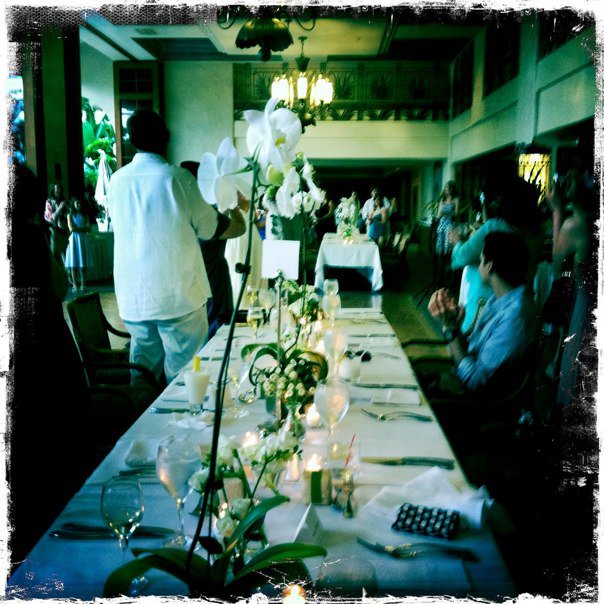
NKO just provided beautiful phalaenopsis orchids for a wedding at the Grand Hyatt Resort Poipu. If you have an event that you would like to use this orchid give us a call. We also have spectacular dendrobium orchids. All orchids are special order by lots ONLY and not part of nursery inventory.

Monday, January 31, 2011

How to start a compost bin in your back yard


How to start a compost bin in your back yard.

Before you begin your composting adventure you want to decide on a good location for your compost bin. Choose a semi-shaded area with easy access to water. You may want to keep the bin away from your living space as odors can develop if the compost is not properly aerated. You can buy bins that have devices for turning and removing compost or you can do the turning by hand. Turning a compost pile is great exercise, but it can be quite a workout for those of us that aren't used to heavy labor.

Automated bins make turning easier and are more convenient but you do not need a pre fabricated bin if you want to make your own. To make you own bin simply make an enclosure using chicken wire and stakes or hammer together five wood pallets (one for the bottom and one for each side). That should be enough space for a 3ft x3ft pile. Remember you want to have easy access if you are manually turn your pile.

Now that you have your compost location and bin start with a simple layer of grass clipping. You can also use leaves but run your mower over them first to break them down before you add to your pile. With your bottom layer in place begin to add some kitchen waste like banana peels, eggshells, old lettuce leaves, apple cores, coffee grounds, and whatever else is available. Do not use meat or fatty food waste. Keep adding materials until you have a six-inch layer, and then cover it with three to six inches of soil, manure, or finished compost.

Continue to alternate layers of organic matter, layers of soil or manure until the pile till the pile is three ft in high and three ft wide. This creates conditions that will begin to generate “heat” as the pile decomposes and the process results in a rich organic sterilized compost that can be used in potting, topping off lawns or as a additives to improved soil for gardens.

You can “turbo charge” your compost pile with activators to get the pile working and speeding up the decomposition process. Sprinkle on some activator and water between layers. Alfalfa meal, manure, or good rich compost from a finished pile are all good activators.

Now that your pile is growing keep it moist but not wet and turn it frequently. Make a small shallow puddle in the top of the pile to hold water and irrigate when it appears dry. You want your compost in semi shaded area but avoid being too close to trees as the roots will naturally be drawn to the compost pile as a food source. If your pile is near a tree, turn it frequently to make sure the tree roots don't grow into it.

This effort will result in you having a rich source of growth medium for your flower container gardens, vegetables and lawns. See you in the garden!

Friday, January 14, 2011

Areca Palms


Areca Palm (Dypsis lutescens) is a beautiful native palm tree from Madagascar. Arecas are common ornamental indoor plants used in offices, institutions and homes from NYC to Singapore. Landscape designs for subtropical and tropical regions most always include Arecas.

Sadly, the Areca is endangered and very rare in its natural habitat Madagascar.

The Areca palm is a low maintenance plant and a rapid grower. If you grow this tropical plant as a house plant it brings an exotic touch into your home and purifies the air. The Areca is consistently rated among the best houseplants for removing all indoor air toxins.

See NKO blog Breath Green post:
http://kauailandscaping.blogspot.com/2010/08/breathe-green.html

In a natural landscape installation Areca Palms grows in clump formation that can reach 20 feet or more in height with a spread of 5-10 feet. It is usually grows much smaller when contained indoors. The Areca Palm reproduces readily from young seeds and by divisions of clumps. Industry experts say Arecas are the most cultivated nursery palm tree.

Mature Arecas have smooth, bamboo-like trunks and grown naturally into attractive arching feather palm fronds. Young plants have reedy stems and are great for indoors. In spring and summer a small creamy yellow flower appears followed by small pale orange fruits.

Areca Palms are a wonderful addition to any decor and look lovely in any landscape. In Hawaii they are great options for hedges providing privacy, low maintenance and lush appearance.

At NKO Nursery in Hanapepe we have a beautiful selection of Areca Palms. Come visit Flora in the nursery.

Locate us at Google maps:
http://maps.google.com/maps/place?cid=16819605838342884948

No Ka Oi Landscape Services or call our office at 808 335 5887 for directions.

Wednesday, December 29, 2010

Kadomatsu - New Year Tradition in Hawaii


As the New Year approaches a custom that is hanai into our local tradition is placing a kadomatsu at the entry door of the home or business. Originated more than 400 years ago the kadomatsu is no longer a common practice in Japan yet it is devotedly perpetuated here in Hawaii as part of the culture brought to the islands during the “peopling of Hawaii.” Japanese visitors to the islands delight in seeing that we in Hawaii carry on a tradition that many no longer practice in Japan.

Kadomatsu (門松, meaning gate pine), is a symbolic decoration made from bamboo shoots and pine (matsu) tied together with a handmade straw rope. Traditionally the kadomatsu is set on both sides of the entry but many folks in Hawaii display a single one on a front porch or at the front desk in a business to usher in good luck for the New Year!

The natural elements used in making of the kadomatsu all have significance. Bamboo symbolizes strength and growth and is tied together with pine cuttings that symbolize long life. Traditionally the kadomatsu is made from 3 bamboo strains, diagonally cut; around 1 meter (3ft) tall but the size can reflect the entryway. In Hawaii smaller ones are usually seen inside of business.

Similar to the art of ikebana (Japanese flower arrangement), the bamboo shoots are set at three different heights and represent heaven, humanity, and earth with heaven being the highest and earth being the lowest. Depending on tradition some kadomatsu makers tie the humanity and earth shoots at the same height. After binding all the elements of the kadomatsu, it is bound with a newly woven straw rope and mat.

Traditionally kadomatsu are placed in pairs on either side of the entry, representing yin (female) and yang (male) – opposite and equal qualities. Plum (ume) blossoms can also be used in the arrangement, representing new beginnings, purity and sweetness.

Place your kadomatsu at the front door after Christmas and keep until January 7th, to welcome the New Year. It is believed that this brings prosperity and good luck in the next year to the families (or the businesses) protected by kadomatsu.

Friday, December 17, 2010

“O Tannenbaum - Hawaiian Christmas Tree Story"


There are many stories about when the “Christmas Tree” and the celebration tradition of the seasonal holiday came to Hawaii. Reading “The Peopling of Hawaii” by Eleanor C. Nordyke” we know plantations brought German immigrants to the islands to support th sugar mills in the late 19the century. They brought with them their culture and traditions which include celebrating with Yule trees.

The German people are credited with introduction of the “Christmas Tree” tradition that has been adopted by cultures around the world and eulogized in the seasonal mele “O Tannenbaum (Christmas Tree) O Tannenbaum” … Your branches green delight us!” School children learn about the nature of the “Christmas Tree” through the lyrics “In beauty green will always grow. Through summer sun and winter snow.” The Black Forest and Alps Region of Europe of are native to all kinds of fir and pine trees and naturally would be a source of decoration for the villages in Deutschland (Germany). Many of the fine holiday tree ornaments sold in department stores like Neiman Marcus are still handmade in Germany.

According to Gary A. Warner, Travel Writer, “on December 25, 1786 the British ship Queen Charlotte was anchored off present-day Waimea, on the west side Kauai. This was eight years after Capt. James Cook had come into Waimea Bay and "discovered" what he would call the Sandwich Islands, after the Earl of Sandwich, the Lord of the Admiralty.” Warner says the sailors sent trinkets ashore to the native women and children on Kauai and were in return gifted with fruits and pig from native Hawaiians…celebrating the first Kauai Christmas.

In 1846, the popular British royals, Queen Victoria and her German Prince, Albert, were sketched in the Illustrated London News standing with their children around a Christmas tree. Undoubtedly Prince Albert, a Dutchman, brought his Yule traditions to the British Court. This image was circulated around the world. Victoria was very popular with her subjects, and what was done at court immediately became fashionable not only in Britain but in the new America. The Christmas tree had arrived as a holiday tradition.

Kauai has a close connection with Queen Victoria and Prince Albert. A view of the famous English monarch, in profile, was fashioned by nature along the distinctive green Ha'upu Mountain Range that graces Kauai’s south side. It is a delight for visitors and locals to find this unique natural sculpture and ponder its very creation! Hawaii’s own royal Prince Albert Edward Kamehameha, the only child of King Kamehameha IV and Queen Emma Kaleleonalani Naʻea, was the Godson of the Queen and given the royal family name in honor of the dear relationship between Queen Victoria and Queen Emma.

In 1856, King Kamehameha IV moved the official national day of Thanksgiving to Dec. 25, more than coincidentally coinciding with Christmas. A large Christmas party was held on the Royal Residence grounds in 1858, including what is believed to be the first Christmas tree. A few years earlier we know that the Australia's Norfolk Island fir, the Norfolk pine was introduced to Hawaii. In a 2006 Honolulu Advertiser Duane Choy wrote “ The first Norfolk pine seedlings were brought to Hawai'i from the Sydney Botanic Garden in 1852 in a cargo addressed to the "King of the Sandwich Islands." This large pine grows to 130 feet tall and is native to Norfolk Island, which is near the east coast of Australia. It is known botanically as Araucaria columnaris, and is sometimes called the Cook Island pine.

Once cut down, Norfolks will stay green, healthy and gorgeous for more than a month making them a perfect choice for a Island “Christmas Tree.” Norfolk pines do not need much water so they are sustainable. Before mainland fir tree importers and as late as the 1970 Norfolks were the only live trees available for Hawaii famlies for the season. With its near perfect branches it makes a graceful traditional Yule tree. Today in Hawaii a few nurseries specialize in growing the Norfolks for folks who want a live tree and for those who care about keeping foreign invasive species from being unleashed into our island environment, which is a risk with mainland trees. Come to NKO nursery and see Flora in the garden for a perfect Yule gift of a live plant for someone special on you list!

Friday, December 3, 2010

POINSETTIA – The Seasons Dazzling Garden Gem


POINSETTIA – The Seasons Dazzling Garden Gem
It’s the most wonderful time of the year especially if you’re a lover of the traditional Christmas plant the Poinsettia (Euphorbia pulcherrima)! Native to Mexico the Aztecs called the vibrant red plant "Cuetlaxochitl." Modern Mexicans know the plant as Flor de Nochebuena (Christmas Eve Flower) whose blooms herald the beginning of the Season.

In the early 19th Century Joel R. Poinsett, the first U.S. ambassador to Mexico brought back Poinsettias cuttings to his South Carolina home. A physician by trade Poinsett was an avid armature botanist who cultivated the cuttings in his greenhouse and sent plants to his friends thereby introducing the plant to America. When the commercial market began to take off Poinsett was given the honor of having the plant named after him. Even though Poinsett had an outstanding career as a United States Congressman and as an ambassador he will always be remembered for introducing the poinsettia into the United States.

Poinsettias became popular in the United States and around the world and today is a significant agriculture product. Popular it is! During the holiday season 85% of plants sold are the beautiful Poinsettia with a market of over 60 million plants grown for sale in all 50 states! The U.S. growers market supplies 90% of the worlds Poinsettia plants. That’s amazing…

Most folks know the Poinsettia as a dazzling red plant but today they are cultivated in many colors including a deep purple. Red, White and Pink are the most common colors you will find at your local nursery or garden shop and often they will have variegated color leaves. Poinsettia plants require a specific kind of care for growers to develop the striking colors. Did you know that Poinsettias does not really have a flower rather “modified leaves” similar to the Bougainville?

Selecting Poinsettias
• Choose a plant with dark green foliage down to the soil line.
• The poinsettia should look full, balanced and attractive from all sides.
• The plant should be 2 1/2 times taller than the diameter of the container.
• Check the plant’s soil. If it’s wet and the plant limp this could be an indication of root rot.

Will my Poinsettia last during the holiday season?
How long your Poinsettia will stay beautiful after you bring it home depends on how old the plant is at time of purchase and how you treat the plant. Poinsettias can retain their beauty for weeks and some varieties will stay attractive for months.
• If the Poinsettia comes in a plastic sleeve remove it immediately.
• Keep your plant in indirect light. Six hours of light daily is ideal.
• On the mainland keep Poinsettias away from warm or cold drafts from radiators, air registers or open doors and windows.
• Check the soil daily. Be sure to punch holes in foil so water can drain into a saucer. Water when soil is dry. Allow water to drain into the saucer and discard excess water.
• Fertilize the poinsettia if you keep it past the holiday season. Apply a houseplant fertilizer once a month. Do not fertilize when it is in bloom.
• Water only when the soil is dry.
• Placing your poinsettia in a cool room 55 to 60°F at night will extend blooming time.

December 12th is National Poinsettia Day.
Learn more here: www.poinsettiaday.com/