Thursday, March 27, 2014

3 Reasons To Choose A Commercial Landscape Contractor Focused On Landscape Maintenance

You’re vetting landscape firms to maintain your commercial property, and there’s much to consider. You want a company that can manage all of your needs: installing plants, caring for landscape beds, maintaining the irrigation system and handling weekly (or more frequent) mowing, edging and basic property maintenance. It’s a tall order.

In the maintenance world, you get what you pay for—and there are plenty of companies out there that bid low and promise a lot (they probably don’t know better). Do your homework, and consider the advantages of working with a commercial landscape contractor focused on maintenance. When maintenance is the specialty, it drives design decisions, informs crews’ performance and raises the quality. The result: a landscape investment that retains its value.

Here are a few reasons why you should hire a landscape firm that focuses on maintenance.

Reason #1: Projects Are Designed With A Maintenance Mindset

Right plant, right place—less maintenance. When plant material is properly selected based on site conditions (soil content, sun exposure, weather in general), you’re giving those plants the best chance to thrive.

Landscape companies that consider maintenance as they execute designs are careful to choose plants that can be maintained successfully. Also, the company will better maintain irrigation systems because it knows the ins and outs of the design and system components.

When landscapes are designed with a maintenance mindset, they actually cost less to maintain. It’s a more budget-conscious approach.

Reason #2: Specially Trained Crews Can Troubleshoot Problems

Maintenance crews have an eye for detail and are trained to identify weed and disease issues in the landscape. They have knowledge of plants and irrigation systems and can make recommendations to improve the look of your property.

And, because they are on the property weekly (sometimes more often) they establish a sort of relationship with the landscape. They get to know its plants, they understand the site’s challenges and are committed to keeping the landscape healthy.

Reason #3: Protect Your Landscape Investment Over The Long-Term

Your landscape is a significant investment, and a regular maintenance schedule performed by an experienced landscape contractor is the best insurance on your living environment.

A landscape left unattended can actually decrease the value of the property—it becomes an eyesore. But the property will thrive if knowledgeable landscape professionals carefully maintain it.

As with anything, you get out of the landscape what you put into it. Hiring a landscape firm that focuses on maintenance will help retain its value for years to come.

We’re Focused On Maintenance

Maintenance matters!

Find out how No Ka Oi Landscape Services can help you make the most of your Kauai commercial landscape investment.

Give us a call at 808-335-5887, or email info@nkolansdcaping.com to learn more about what we can do for you.


Wednesday, March 26, 2014

3 Hidden Landscape Maintenance Costs On Your Kauai Commercial Property

You’ve got big plans for your landscape, and that includes an inspired plant list of flowering shrubs, annuals, perennials and trees that will captivate an audience.

As a commercial property, you recognize that curb appeal translates to attracting customers who spend. A properly planned landscape can be a welcome mat that reels in revenues.

But maintenance can be a costly drain on finances if a landscape project isn’t planned with the after-care in mind. A professional commercial landscape company will go beyond creating the design and lay out a maintenance plan, as well.

In the meantime, here are three hidden maintenance costs to consider—and beware if your landscaper isn’t telling you about these culprits up front.

Hidden Maintenance Cost #1: High-Maintenance Plants

A landscape plan should take into account your site’s conditions: sun exposure, soil content and quality, and overall environmental conditions. On Kauai, your property’s “weather” can depend on whether the site is located on the eastern, middle or western part of the island.

With northeast tradewinds bringing precipitation and ample rainfall to eastern properties, those clouds dissipate mid-island and western areas can be very dry. Plant selection should be based on the property’s microclimate, and on Kauai, every site can demand different considerations.

Hidden Maintenance Cost #2: Too Much Turf

The ideal image of a golf course’s green lawn is not necessarily what nature intended. The reality is, turf can require frequent irrigation and a meticulous lawn care program to manage weeds and disease.

That said, an expanse of the proper turf for Kauai (turf selection is key!) can be much easier and less time-consuming to maintain than small patches that require reel mowing. To reduce maintenance costs, talk to your landscape professional about the best turf type to use on the property.

Also consider enlisting in a landscape maintenance company that can regularly keep the property looking its best through proper cultural practices.

Hidden Maintenance Cost #3: Overgrown Plant Life

No maintenance at all is high maintenance. A landscape in decline requires more care, attention and expense to get it back into shape.

It’s like cleaning a house: If you let it go for months, you’ll pay a cleaner much more to get the home back into nice condition. Then, regularly maintaining it is easier, faster and less costly. The same goes for the landscape.

Property owners that prioritize maintenance and keep the site in good condition all year will avoid a backlog of maintenance tasks (and bills).

We Can Help!

Right plant, right place: That’s our mantra at No Ka Oi Landscape Services. 
Let us help you reduce your property's maintenance costs by designing sustainable landscapes that look the way nature intended. 
Call us at 808-335-5887 or email info@nkolansdcaping.com. Or, visit our website to learn more about the services we offer.


Wednesday, March 19, 2014

5 Questions to Ask When Planning Your Kauai Commercial Landscape

kauai commercial landscape
You’re ready to embark on an overhaul of your commercial landscape.

It’s time to revamp, or completely renovate and start from scratch. This is a big decision, and a wise one. The returns on a landscape investment are many, including: increased foot traffic on a commercial property, and more enjoyable experiences for site visitors, who will be likely to stay on the property longer. They may even spend more money!
Landscaping can also be a competitive advantage over other commercial properties. As consumers, we often choose with our eyes: What appeals wins.

That said, a lot of planning is required before breaking ground. Here are five questions you should ask yourself while planning your commercial landscape.

Start With W’s: Who Will Use the Space — When and Why?

Let’s start with the basics: Who is the “audience” on your property, and why do people go there? Are they guests of a luxury resort who have traveled far to get there? Or, are they shoppers in a retail complex—or individuals going to work at an office building?

Also, consider when the property will be used. This helps when planning features such as landscape lighting and other functional/safety aspects of the property.

What Are The Property ‘Pains?’

kauai commercial landscape
Every property has its high and low points. What challenges does your site present? Are there slopes that prompt erosion issues? Is drainage a concern? Examine sun exposure and identify plant beds need attention. (There’s always a reason why: sun exposure, soil content, maintenance, etc.)

Keep in mind, these property pains can be addressed, and an experienced commercial landscape contractor will find solutions, work around any limitations and highlight your property’s assets.

What Opportunities Does The Property Offer?

It’s not all bad, is it? Now, make a list of the property’s positive qualities. What do you like best about the landscape? Is it the showy bed of annuals at the entrance that invites guests inside, or a tall, swanky palm that has been on the property before any person’s foot every set ground there? Do you love the direct sun the property gets, or the shady spaces that provide protection from the heat?

A well-executed landscape design will enhance your property’s best qualities while addressing aspects that are cause for concern. The result: No one will notice those property “pains” you addressed.

What Is Your Landscape Budget?

You probably have a number in your head for what you can afford to spend on the landscape, and if you don’t then now is the time to put pen to paper. It’s never too early to talk budget. What can you afford this season?

Remember, landscaping is a long-term commitment, and once a master landscape plan is developed, projects can be broken down into manageable phases that accommodate your budget.

How Will The Property Be Maintained?

Over the life of a landscape, the design and installation is a small portion. The real work involved comes with maintaining the property so it thrives. Proper, ongoing maintenance is critical for ensuring the health and vitality of the landscape—and protecting your investment. The good news is, a low-maintenance landscape can be designed to reduce the time and cost associated with weekly and seasonal care.

Also think about who will ultimately maintain the property. Is the company that installed the landscape equipped to continue with maintenance? This is a best-case scenario, because you’ll know that the landscape was designed with maintenance in mind. Plus, the team will be personally acquainted with the plants and layout of your property, not to mention committed to its success.

No Ka Oi is the only commercial landscape company to focus on maintenance, but we can also help you plan your new landscape installation with future maintenance and upkeep in mind. Ready to plan your Kauai commercial landscape and not sure where to start? Let No Ka Oi walk you through the process, and help you identify the challenges, assets—and potential—on your property.

Give us a call anytime. Ring us at 808-335-5887 or email info@nkolansdcaping.com.


No Ka ‘Oi: What’s In a Name?

kauai commercial landscaper
Simply: the best.

That’s the meaning of No Ka ‘Oi in Hawaiian, and we adopted the name for our Kauai landscaping firm because we set high standards for our work. We want our clients to know that we live up to our name. Being the best means operating a business that is relevant, focused on quality and delivers uncommon customer service—we care about every property as if it were our own.

Here's a look at what No Ka 'Oi means to the No Ka Oi Landscape Services staff.

Dedicated To Manuahi


By that, we mean taking the extra measure. We strive to exceed clients’ expectations, and because of that they talk about us. A significant percentage of our work is based on referrals, so we know that many of the clients who hire us do so because of our no ka ‘oi culture.

It’s our job to uphold our reputation by going the extra mile, whether that means suggesting sustainable solutions that will ease maintenance and lessen the environmental impact, or ensuring that every property looks immaculate after delivering landscape maintenance service.

Focused On Commercial Landscape Maintenance

No Ka ‘Oi Landscape Services is dedicated to commercial landscape maintenance. Eighty percent of our work is maintenance, and 20 percent is design/build, mostly enhancements for our maintenance clients, which allows them to work with a company that truly understands their needs.

We aren’t trying to be everything to everyone. We are the only company in Kauai focused on maintenance, and we like installation relationships to transition into long-term maintenance. That way, we know we can maintain the integrity of the landscape.

Committed To Sustainability

Kauai is known as the garden island — it is our responsibility to create and maintain landscapes that are natural and sustainable. This means we must look at new ways of approaching challenges in Kauai commercial landscapes.

We search for ways to lighten our environmental footprint—and our clients appreciate that the sustainable landscape we design and maintain are much easier to care for and look lush because the plants are intended for our island environment.

Training the Best Landscapers

We invest in educating our employees and emphasize safety. This is important to clients who can rest assured that our team members approach every job with care and consideration.

No Ka ‘Oi Landscape Services is a two-time recipient of PLANET’s no accidents/injuries award. That means our company had a perfect safety record for two five-year stretches—something we’re very proud of.

Spreading the No Ka ‘Oi

Looking for “the best” commercial landscape company in Kauai and not sure where to start? We’ve got a good idea. Our priority is educating others about the value of landscape, and we’d love to talk to you about why hiring a contractor with high standards matters to your business.

Give us a call anytime. As we tell our clients, we’re big, we’re beautiful—and we’re nice. Ring us at 808-335-5887 or email info@nkolansdcaping.com.


Wednesday, March 5, 2014

Don’t Settle: Qualities to Look For In Your Kauai Commercial Landscape Contractor

An attractive, thoughtfully maintained landscape speaks volumes about a business. Natural, healthy plantings roll out the red carpet for guests. Lush landscapes set the tone for visitors arriving at high-end Kauai resorts, and shoppers are more likely to pull into a retail plaza and spend money there if the atmosphere is appealing.

Kauai commercial landscape
Who will you trust to care for and maintain
your Kauai commercial landscape?
Landscape management goes far deeper than curb appeal. Hiring a landscape contractor to care for your Kauai commercial property is a big decision—and a significant investment, depending on the size and scope of your property.

Savvy business owners in every industry know to focus on their talents, and seek out professionals who are experts in their fields to manage other critical tasks. That means sourcing a reputable, high-quality commercial landscape company that will execute on your goals. (Yes, you should absolutely get a return on this investment.)

But what should you look for when vetting a commercial landscape company? As you embark on the bidding process, or at the very least interview a few firms for the job, here are some thoughts to keep in mind as you make the decision.

Quality #1: Solid Qualifications


You usually get what you pay for, so forget price shopping if your goal is to hire a quality commercial landscape contractor. Instead, consider the company’s portfolio of clients: What other commercial establishments in your area use this firm, and how do their properties look?
 
Look for certifications and membership in professional associations, such as the Professional Landcare Network (PLANET). Involvement in the local chamber of commerce shows a commitment to the community. Find out if the landscape company has received awards for their work. This is an indication that the firm is a high-performer.

Quality #2: Problem Solving

A professional landscape management company will generally conduct a property walkthrough prior to providing a bid to get better acquainted with your landscape and its needs. This is an ideal time to ask questions.

Find out how the company would manage a trouble spot. Ask about solutions for an overgrown area, or sustainable landscape choices that will reduce maintenance costs. You want to hire a company that does more than cut the grass and trim back hedges.

A quality commercial landscape contractor will help solve problems and constantly seek ways to improve your property’s appearance and increase its value.

Quality #3: Dedication

Ask the commercial landscape companies you’re vetting to explain how they’ll communicate with you about your property, including progress updates, potential problems and ideas for landscape enhancements.

Set expectations concerning service frequency, and get on paper a commitment to fulfill your maintenance objectives. Look for a maintenance company that specializes in landscape management. You’ll know they are bringing you best-in-class service because maintenance is their sweet spot.

Quality #4: Safety

It’s rarely the first thing you’ll ask a landscape contractor—but it probably should be: What’s your safety record?

How does the company train its crewmembers to stay safe while executing high-quality service? (What about eye and ear protection?) Commercial landscape companies with a clean safety record usually take extra measures when hiring employees, including drug testing. All this sets a higher standard for quality.

Quality #5: Stellar References

Word of mouth is the best way to source a quality Kauai commercial landscape contractor. Why? Because when we’re happy about the work someone provides us, we want to brag about it. If you’re hearing positive feedback about a landscape company directly from another client, take those referrals to heart. (Think about it: We’re more likely to complain about a company than sing its praises—so if another owner is boasting about their landscape firm, listen up.)

Be sure to call references provided by the landscape company. Ask those contacts specific questions, such as: Tell me about a time when you were not pleased, and how did the company make it right? By asking a couple of on-point questions, you’ll gain a more honest perspective of the company’s performance.

No Ka Oi Means The Best

Looking for a commercial landscape company on Kauai — but don’t know where to start? We’ve got a good idea.

Our priority is educating others about the value of landscape, and we’d love to talk to you about why hiring a quality contractor can boost your own company’s profile.

Give us a call anytime. As we tell our clients, we’re big, we’re beautiful—and we’re nice. We can’t wait to talk to you! Ring us at 808-335-5887 or fill out the contact form on our website, and we'll get in touch with you.

Wednesday, December 5, 2012

“O Tannenbaum - Hawaiian Christmas Tree Story"


There are many stories about when the “Christmas Tree” and the celebration tradition of the seasonal holiday came to Hawaii. Here's NKOs!

Reading “The Peopling of Hawaii” by Eleanor C. Nordyke” we know plantations brought German immigrants to the islands to support th sugar mills in the late 19th Century. They brought with them their culture and traditions which include celebrating with Yule trees. 

The German people are credited with introduction of the “Christmas Tree” tradition that has been adopted by cultures around the world and eulogized in the seasonal mele “O Tannenbaum (Christmas Tree) O Tannenbaum” … Your branches green delight us!” School children learn about the nature of the “Christmas Tree” through the lyrics “In beauty green will always grow. Through summer sun and winter snow.”

The Black Forest and Alps Region of Europe of are native to all kinds of fir and pine trees and naturally would be a source of decoration for the villages in Deutschland (Germany). Many of the fine holiday tree ornaments sold in department stores like Neiman Marcus are still handmade in Germany. 

According to Gary A. Warner, Travel Writer, “on December 25, 1786 the British ship Queen Charlotte was anchored off present-day Waimea, on the west side Kauai. This was eight years after Capt. James Cook had come into Waimea Bay and "discovered" what he would call the Sandwich Islands, after the Earl of Sandwich, the Lord of the Admiralty.” Warner says the sailors sent trinkets ashore to the native women and children on Kauai and were in return gifted with fruits and pig from native Hawaiians…celebrating the first Kauai Christmas.

In 1846, the popular British royals, Queen Victoria and her German Prince, Albert, were sketched in the Illustrated London News standing with their children around a Christmas tree. Undoubtedly Prince Albert, a Dutchman, brought his Yule traditions to the British Court. This image was circulated around the world. Victoria was very popular with her subjects, and what was done at court immediately became fashionable not only in Britain but in the new America. The Christmas tree had arrived as a holiday tradition.

In 1856, King Kamehameha IV moved the official national day of Thanksgiving to Dec. 25, more than coincidentally coinciding with Christmas. A large Christmas party was held on the Royal Residence grounds in 1858, including what is believed to be the first Christmas tree. A few years earlier we know that the Australia's Norfolk Island fir, the Norfolk pine was introduced to Hawaii.

Kauai has a close connection with Queen Victoria and Prince Albert. A view of the famous English monarch, in profile, was fashioned by nature along the distinctive green Ha'upu Mountain Range that graces Kauai’s south side. It is a delight for visitors and locals to find this unique natural sculpture and ponder its very creation! Hawaii’s own royal Prince Albert Edward Kamehameha, the only child of King Kamehameha IV and Queen Emma Kaleleonalani Naʻea, was the Godson of the Queen and given the royal family name in honor of the dear relationship between Queen Victoria and Queen Emma.

In a 2006 Honolulu Advertiser Duane Choy wrote “ The first Norfolk pine seedlings were brought to Hawai'i from the Sydney Botanic Garden in 1852 in a cargo addressed to the "King of the Sandwich Islands." This large pine grows to 130 feet tall and is native to Norfolk Island, which is near the east coast of Australia. It is known botanically as Araucaria columnaris, and is sometimes called the Cook Island pine. 

Once cut down, Norfolks will stay green, healthy and gorgeous for more than a month making them a perfect choice for a Island “Christmas Tree.” Norfolk pines do not need much water so they are sustainable. Before mainland fir tree importers and as late as the 1970 Norfolks were the only live trees available for Hawaii families for the season. With its near perfect branches it makes a graceful traditional Yule tree. Today in Hawaii a few nurseries specialize in growing the Norfolks for folks who want a live tree and for those who care about keeping foreign invasive species from being unleashed into our island environment, which is a risk with mainland trees.

Come to NKO nursery and see Flora in the garden for a perfect Yule gift of a live plant for someone special on you list!

Monday, November 26, 2012

POINSETTIA – Flor de Nochebuena


It’s the most wonderful time of the year if you’re a lover of the traditional Christmas plant the Poinsettia (Euphorbia pulcherrima)! 

Native to Mexico the Aztecs called the vibrant red plant "Cuetlaxochitl." Modern Mexicans know the plant as Flor de Nochebuena (Christmas Eve Flower) whose blooms herald the beginning of the Season. 

In the early 19th Century Joel R. Poinsett, the first U.S. ambassador to Mexico brought back Poinsettias cuttings to his South Carolina home. A physician by trade Poinsett was an avid armature botanist who cultivated the cuttings in his greenhouse and sent plants to his friends thereby introducing the plant to America. When the commercial market began to take off Poinsett was given the honor of having the plant named after him. Even though Poinsett had an outstanding career as a United States Congressman and as an ambassador he will always be remembered for introducing the poinsettia into the United States.

Poinsettias became popular in the United States and around the world and today is a significant agriculture product. Popular it is! During the holiday season 85% of plants sold are the beautiful Poinsettia with a market of over 60 million plants grown for sale in all 50 states! The U.S. growers market supplies 90% of the worlds Poinsettia plants. That’s amazing…

Most folks know the Poinsettia as a dazzling red plant but today they are cultivated in many colors including a deep purple. Red, White and Pink are the most common colors you will find at your local nursery or garden shop and often they will have variegated color leaves. Poinsettia plants require a specific kind of care for growers to develop the striking colors. Did you know that Poinsettias does not really have a flower rather “modified leaves” similar to the Bougainvillea? 

Selecting Poinsettias
• Choose a plant with dark green foliage down to the soil line.
• The poinsettia should look full, balanced and attractive from all sides.
• The plant should be 2 1/2 times taller than the diameter of the container.
• Check the plant’s soil. If it’s wet and the plant limps this could be an indication of root rot.

Will my Poinsettia last during the holiday season?
How long your Poinsettia will stay beautiful after you bring it home depends on how old the plant is at time of purchase and how you treat the plant. Poinsettias can retain their beauty for weeks and some varieties will stay attractive for months.
• If the Poinsettia comes in a plastic sleeve remove it immediately. 
• Keep your plant in indirect light. Six hours of light daily is ideal. 
• On the mainland keep Poinsettias away from warm or cold drafts from radiators, air registers or open doors and windows.
• Check the soil daily. Be sure to punch holes in foil so water can drain into a saucer. Water when soil is dry. Allow water to drain into the saucer and discard excess water.
• Fertilize the poinsettia if you keep it past the holiday season. Apply a houseplant fertilizer once a month. Do not fertilize when it is in bloom.
• Water only when the soil is dry.
• Placing your poinsettia in a cool room 55 to 60°F at night will extend blooming time.

December 12th is National Poinsettia Day. 
Learn more here: www.poinsettiaday.com/

Friday, January 27, 2012

2012 - The Year of the Dragon NKO’s word is QUALITY


From Abby’s Desk!

Each year NKO has a “one word theme” to focus our company actions and support our goals. We ask each NKO team member to think about what the theme means professionally & personally.

For 2012 - The Year of the Dragon NKO’s word is QUALITY

Simply defined QUALITY is “the degree of excellence.” Quality may be interpreted differently by individuals, situations or by results - expected or achieved. At NKO we like to exceed our clients’ expectations and always strive to achieve customer satisfaction with our company staff and services.

A philosophical view of the word QUALITY may be, “I can’t define it, but I know when I see it.” At NKO we know when we see it AND we know how to achieve it. NKO views QUALITY as quantifiable and measurable.

We have established characteristics we use as benchmarks that are tangible and achievable. Excellence in quality is not only in the eye of the beholder but also in the standards set by NKO management and by employing sustainable and best management practices.

At NKO our competitive advantage is based on QUALITY.

Every member of the NKO organization is clear about the concept, definition, and measurement of QUALITY as it applies to their job responsibilities. What best satisfies a clients preferences or needs are those with the highest quality for that account.

Value-based quality is defined in terms of costs as well as other attributes. A client’s expectation is based on quality services at the acceptable price. Indeed you get what you pay for in the number of hours you contract for services but the QUALITY of the work is what makes NKO stand out as a leader in providing landscape services on Kauai.

Friday, September 2, 2011

Laua’e Fern


Common Laua’e Fern (Microsorium scolopendria plydodium)

The plant commonly referred to as Laua’e Fern (Microsorium scolopendria plydodium) is actually a non-native species ornamental garden plant. This common Laua’e Fern is native to parts of Oceania and tropical Asia and is NOT indigenous to Hawaii. This hardy Laua'e Fern is one of the most beautiful and well known ferns throughout the Hawaiian Islands.

Laua’e Ferns typically grow on "runners" over the ground and have large glossy green leaves. Look closely at a Laua’e Fern and you will notice two types of leaves, vegetation and spore bearing. The spores are clustered together on the underside of leaf. In reproduction, the spores fall to the ground and grow into new plants in a ground area that is shady, warm and moist.


True Laua’e Fern ((Microsorum spectrum wainiha)

The native Laua’e Fern mentioned in hula chants and spoken of in Mary Kawena “Pukui’s ‘Ōlelo No‘eau” actually refers to another much more rare fern found in Kauai’s Wainiha Valley. The true Laua’e Fern, (Microsorum spectrum wainiha), is so rare it has been replaced in cultural hula practices with the non-native fern, Microsorium scolopendria plydodium, which is more common. Traditionally, true Laua’e was used to scent kapa cloth with its delicate maile like fragrance as well as in lei making and for native spiritual practices including hula.

Laua’e Ferns add interesting texture and color to tropical landscapes. The common Laua’e Fern thrives in a variety of locations. Laua’e can grow on rocks, trees trunks or on the forest floor as well as a ground cover. The leaves are often used for decorations. Cut fronds can last about a week for flower displays. You will find the common Laua’e Fern used in landscape designs for resorts and shopping centers and local gardens where it grows nicely in shady moist soil.


Friday, August 5, 2011

Showers of Flowers on the Road to Poipu.


When driving South along Ala Kinoki Way (the Koloa By Pass Rd), look carefully on the right side just past the Koloa junction (Weli Weli Rd) you will see a small "plaque" dedicating the planting of the gorgeous Rainbow Shower Trees that line the road on the way to Poipu. The humble "plaque" states that in 1996 The Koloa Community Association (KCA) donated the Rainbow Shower Trees to the “community.”

No Ka Oi Landscape Services (then No Ka Oi Plants) was asked to support the original 1996 tree planting. It was at the suggestion of Abby Santos, NKO CFO and Licensed Landscape Contractor, that KCA choose the Rainbow Shower Tree for this beautification project.

The vision for Ala Kinoki Way is to be lined with a colorful canopy of tropical trees that would bring beauty, a sense of place and offer a shaded welcoming green-way to locals and visitors driving to and from Poipu. The Koloa bypass road is very windy, hot and dry making the selection of the type of tree that would be sustainable without irrigation and could withstand the microclimate of the area critical to the project’s success. The Rainbow Shower Tree was a perfect selection.

The Koloa Rainbow Shower Trees have beautiful flower clusters that start blooming in late Spring with rice paper like blossoms ranging in hue from deep pink, to soft yellow, to a snowy white. A sterile hybrid that originated in Hawaii from the cross pollination of its Asian ancestors - Golden Shower Tree and Pink Shower Tree-the Rainbow Shower Tree is bright, beautiful and elegant.

Rainbow Shower Trees are drought tolerant. They grow best in full sun, hot, and dry conditions. Perfect for Koloa/Poipu! The mature height of this hybrid is 30–40 ft, and the colorful canopy can cover up to 35ft. Rainbow Shower Trees grow well in sandy to clay soils.

There are several different cultivars of the Hawaii hybrid Rainbow Shower Trees (Cassia x nealia), each having various colors of flowers, often maturing from one color to another. The Wilhelmina Tenney variety has red, yellow, and white blossoms in each cluster and the designation of being the official tree of Honolulu! The Queen’s Hospital White’s first bloom with yellow-­orange flowers that become a creamy white with maturity. The Lunalilo Yellow starts with rich golden blossoms that soften to a light yellow over time and the Nii Gold blossoms are rich golden yellow.

Because the Rainbow Shower Tree is a sterile hybrid, the trees do not produce seed pods. Another plus is the root system is non-aggressive. Annual pruning aids in shaping and flower production. This low maintenance makes it ideal for planting in Hawaii’s parks, along roadways and in resort and commercial landscapes.

The shower of flowers makes us lucky we live Hawai'i Nei!

Tuesday, July 5, 2011

Hawaii Four 0 Seasons


Hawaii Four-0 Seasons

In Hawaii when we talk seasons we often identify Winter, Spring, Summer and Fall in a way that is localized to the micro climate where we live. We use indicators like surf conditions (South Swell- Summer, Winter Swell - North Shore), wet or dry (no make salt, make salt), flower blooms for leis (pakalana, pikaki, plumaria perfumes the air…) and fruits in season (can you say mango season!)

Lucky we live Hawaii!

If you have traveled to Hawaii you know that each major island is unique in size and land conditions. All the islands are built upon volcanic terra firma – with rainy sides and dry sides and mountains in the middle. This natural ecology allows for a year round growing season and make for some delicious local eating.

Visiting Hawaii this summer? - Plan to buy LOCAL seasonal fruit…if you can. Shopping in HI supermarkets you might be tempted to pick up a peach but be forewarned; mainland imported produce has spent weeks in transit and just aren’t flavorful by the time they arrive here in the islands.

Living in Hawaii we are always looking for the best local seasonal produce, whether from our yard, fruit stands, farmer’s markets or the grocery stores. The islands are full of farmers markets, some sell ONLY organic produce; others have farmers with specialty items like goat cheese and honey. Don’t be surprised if you see fruit stand along the road with a “honor system” for payment. That’s local style…still.

If you're not local, be aware that farmers markets in Hawaii have serious start-times. Shoppers line up and wait for the opening horn at which point folks run to claim the freshest lettuce and most fragrant pineapple… and this time of year mangos. The “aloha” seems a bit lacking in the “rush for the best” but if you lay back and let the crazy pass you will find a plethora of farm fresh fruits, veggies and local products that will make your experience worth the price.

This year the island of Kauai seems to have had a lot of rain, particularly on the Westside of Kauai where our best mangos grow. Locals say the mango and lychee crops, if any, will be small. Folks start eating mangos green with shoyu and continue on thru the Summer when the ripe, juicy and fragrant fruit is usually abundant.

Along with mango and lychee, breadfruit, starfruit (pictured above), Meyer lemons, seedless limes and logan are the fruits of Summer in the Islands. They are showing up at markets but it’s get em when you can. Some years we have so many mangos that folks can’t give them away…not this year.

Friday, May 13, 2011

PLANT NATIVE


PLANT NATIVE

Naturally NKO gets asked questions all the time – “Why is my bougainvillea not flowering?” “My hibiscus has a white bug - what is it?” “My lawn has brown patches - what do I do?” Many times these are temporary conditions that left alone nature will take care. That said if your garden looks flat you may have to take some corrective measures to bring it to a healthy and lush appearance.

Fertilizers can support healthy plant growth, but like in life too much of a good thing (Lilikoi Pie!) may have negative effects. It is important to apply only what “food” a plant can use. Over application of plant fertilizers can have a negative effect on your garden and the larger natural environment. Plus they cost a lot!
When fertilizers and plant food nutrients are over applied they tend to leach into the surrounding soil, find a way into our ground water and run off into streams and the ocean. Where this happens we may find aggressive aquatic plant growth in reservoirs, streams, lakes and bays. These invasive aquatic plants may look nice at first glance but they choke off the sunlight and oxygen that support the area’s natural ecosystem. Not a good thing.

One of the best solutions to having to use additives and fertilizers in your garden is to consider using native plants or others plantings with low fertilizer needs and turf like El Toro sod.

A smart approach, when evaluating how to feed your lawn and garden is to take the simple step of doing a soil test. A simple soil analysis will show if you are applying too much, too little, or the wrong type of fertilizer. The cost of fertilizers is significant and without a reliable soil analysis you may be wasting money and time using the wrong product and not getting the results you expect.

Hawaii experts say not to buy commercial test kits as they are not “not calibrated to give accurate recommendations for Hawaii.” Call your local University of Hawaii Cooperative Extension Service (CES) office for information on how you can take and submit soil samples to the UH Agricultural Diagnostic Service Center (ADSC) for testing. The Kauai CES office can be reached at 274-3471. We do know that you will want separate soil tests for your lawn and for your garden. When the results come in the cooperative extension agent should be able to help you understand the test report, recommend the type(s) of fertilizer for your landscape, and the proper application amounts for your landscape needs. If this is for your lawn you want to get info on how to correctly calibrate your fertilizer spreader.

With the proper information you will be feeding your lawn and gardens what they need. Soil testing is not complicated and with CES experts information you will be on your way to a healthy landscape and know you are protecting the natural Hawaii environment.

NKO is the BEST Kauai source for El Toro sod that is grown in Poipu. Call Abby at 645-0710 and she can let you know when the next harvest will take place.

Wednesday, April 27, 2011

National Arbor Day 2011 is Friday April 29th!


National Arbor Day 2011 is Friday April 29th!

Along with the general national observation of Arbor Day, each State has specific day in which Arbor Day activities and observance is held. In Hawaii Arbor Day officially falls on the first Friday in November, which in 2011 will be Friday November 4th. Celebration and tree giveaways usually take plane on the following Saturday.

In celebration of National Arbor Day, Friday April 29, 2011, our dear friend and associate Allan G. Schildknecht, the Guru of Irrigation, sent us an Arbor Day email and we thought we would share it on the NKO Blog. (Read below)

While J. Sterling Morton founded Arbor Day over 135 years ago, the commitment today is stronger than ever, especially as when we realize trees the benefits trees provide:
•Reduce the erosion of our precious topsoil by both wind and water, cut heating and cooling costs
•Moderate the temperature
•Clean the air, produce life-giving oxygen
•Provide habitat for wildlife.

Check out these interesting tree facts:
•The shade and wind buffering provided by trees reduces annual heating and cooling costs by 2.1 billion dollars.
•A healthy tree can increase your property value by as much as 27 percent.
•A single tree produces approximately 260 pounds of oxygen per year. That means two mature trees can supply enough oxygen annually to support a family of four!
• One tree can absorb as much carbon in a year as a car produces while driving 26,000 miles.

This Friday April 29, 2011 consider celebrating National Arbor Day and make a difference:
• Plant a tree - It is an act of optimism and kindness, a labor of love and a commitment to stewardship.
• Read a book about trees. Learn to identify trees in your yard and neighborhood. There is an app for that!
• Enjoy the outdoors. Hike a Kokee trail or take a family walk/bike on the Ke Ala Hele Makalae (The Path That Goes by the Coast).
• Volunteer. You'll meet new people and make a difference in your community.

Monday, April 18, 2011

Earth Day Birthday!


April 22, 1970 was the 1st Earth Day and a movement was born!

Every year on April 22 the world celebrates Earth Day. Small business, community groups, corporations and government agencies around the world join together finding common ground in cultivating projects that support a healthy Planet Earth.

April 22, Earth Day, is birthday of the modern environmental movement - the beginning of awareness that we, the inhabitants of Planet Earth, need to care for our environment, use natural resources responsibly, control pollution and volunteer to improve the Planet through socially responsibility economic development and government policies that support sustainability and a healthy natural environment to live, work and play in for generations.

In the 1970s scant attention was paid to the “environment.” Protests were part of American culture for movements on Civil Right, Women’s Rights and the Viet Nam War – but protecting Planet Earth was not yet part of the collective consciousness. Most people took Plant Earth for granted thinking that natural resources were unlimited.

There was no economic or social awareness of what the world would be experiencing in the mid 20th Century modernization in America, nor the impacts of the rapid growth of developing countries or realities of global population explosions. All were silently taking a toll on Planet Earth - the beginning of a tipping point for the Environment that was compromised and unsustainable.

American cars were gas guzzlers, utility companies and factories belched out polluted smoke, sludge waste went into our rivers and no one was talking about renewable energy or oil dependency. “Environment” was a spelling bee word not a news headline.

So what changed? Inspiration and education came thru the pen of Rachel Carson, a established natural history writer, who’s 1962 book Silent Spring, a New York Times bestseller and Book of The Month Club selection, was serialized in The New Yorker magazine. Carson’s writings brought awareness to how the modern chemical industry was having a detrimental effect on environment and the lack of any independent oversight in protecting the public interest from these effects.

Carson raised public awareness and concern for living organisms, the environment and public health. Her writing is considered to have launched the “environmental movement” whose first victory was the ban of pesticide DDT in 1972. Silent Spring is #5 on the Modern Library List of Best 20th-Century Nonfiction and is named one of the 25 greatest science books of all time by the editors of Discover Magazine.

The idea of Earth Day began in 1970 with Senator Gaylord Nelson who, along with a conservative Congressman Peter McCloskey, established a public event that was to be a “national teach-in on the environment.” This event capitalized on the emerging consciousness of caring for the world we live in and channeled the energy of the war protest movement and putting environmental concerns front and center.

April 22 1970 was the 1st Earth Day and a movement was born. Two million Americans took to the streets, public parks, and auditoriums to educate, learn and demonstrate for a healthy, sustainable environment. The broadcast media had coverage on the evening news and in print the headline Earth Day became part of our national dialog.
Massive rallies were held coast to coast with support across political parties, city and country folk, all economic levels and labor and industry coming together in a collective raising of environmental conscientious.

On college and universities campuses protests brought attention to the deterioration of the environment. Groups who had had been fighting against oil spills, polluting factories and power plants, raw sewage, toxic dumps, pesticides, freeways, the loss of wilderness, and the extinction of wildlife came together in a unified voice brining attention and action to the “environmental movement.”

The attention and awareness created on April 22, 1970, the first Earth Day, led to the establishment of the United States Environmental Protection Agency (EPA) and the passage of the Clean Air, Clean Water, and Endangered Species Acts.

Earth Day went global in 1990 when over 200 million people in 141 countries celebrated and raised awareness around the planet lifting the “environmental movement” to the world stage promoting the economics of recycling. In Earth Day 2000 the focus was on global warming and clean energy solutions with more countries and people celebrating Earth Day.

In 2011 the US EPA and environmental laws are being challenged by some and championed by many for creating public policy that supports responsible and sustainable stewardship of the environment. Recent energy industry accidents like the BP oil spill into the Gulf of Mexico and the Japanese nuclear reactor disaster brings attention to how we live and the need to find environmentally sound solutions to building a sustainable world.

Monday, March 21, 2011

Why NKO loves our customers!

From Abby’s Desk
Customer relations are a large part of small business management. Challenging as it may be at times, customer satisfaction is key to building a profitable and constructive business relationship. The old adage” the customer is always right” does not always fit a modern 21st Century approach to customer relations.
This becomes especially true when a long time account gets a new manager. All the customer relations investment that was established previously may not carry over to the new management. Both customer and vendor have to establish their style and work thru expectations until the new relationship is “in sync.”
Over the years I have learned to take time to get to know new managers and give them space to do things their way. I find, especially after their first crisis, new managers develop an working understanding of why NKO has been a trusted service provider long before their station and will be there when they move on to another position.
As a small business manager, on days when customer relations are a challenge, I try to keep in mind “Why NKO loves our customers!”
• NKO customers treat our workers with respect
• NKO customers pay on time!
• NKO customers give us extra work
• NKO customers call us when they need help
• NKO customers are loyal
After all NKO Goals are to:
• Work with Aloha
• Customer Satisfaction
• Profitability
• Company Growth
• Valued Employees
If we take our list of “Why we love our clients!” and NKO Goals we find they are indeed “in sync.” Keeping both in mind makes, even on the most challenging of days, my day just that much better!

Monday, February 28, 2011

Phalaenopsis Orchids - Poise and Grace


Orchids are beautiful, elegant plants that bring peace to their surroundings. Placed in any room an orchid in bloom fills a room with serenity and grace. One of the most recognized orchids is phalaenopsis (pronounced fal-en-op-sis) with its round petals and dramatic flowers.

Not only beautiful, the phalaenopsis orchid flowers can last for months and although they look delicate are quite hardy. Phalaenopsis have become one of the most popular variety of orchids because of their low maintenance and delicate balance of poise and elegance. Their long bloom makes for a very good value. Phalaenopsis will bloom year after year with some care.


TIPS for caring for your plant:
• Phalaenopsis enjoy much the same temperature range as we do. Nighttime 60-65°F, daytime 75-85 °F. Occasional deviations will not harm your plant.
• Phalaenopsis will flourish in indirect sunlight.
• Water once a week to keep moisture just below the surface of the medium.
• Phalaenopsis enjoy moist air, with a humidity level of 55-75% being ideal.
• Feed your plant once a month with a high nitrogen food. In this instance, less is more. So be sure not to overdo it.
• Plants should be repotted every other year in a medium-grade wood bark.
• When the last bloom drops, cut your flower spike halfway down the stem. Continue caring for it and wait for a re-bloom every six months or so.

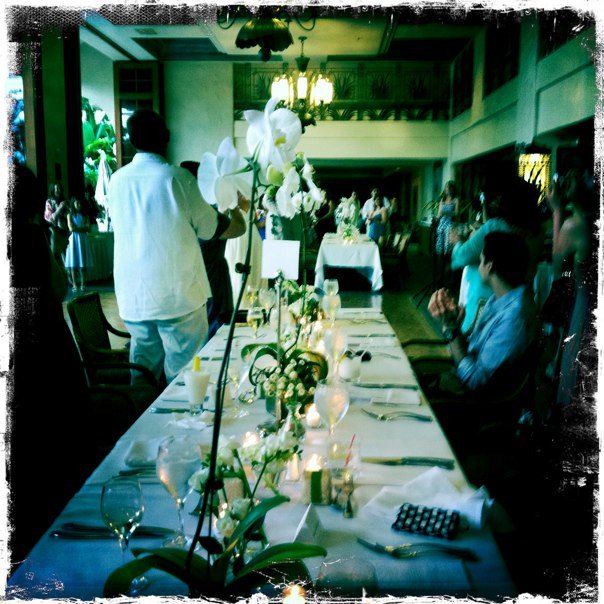
NKO just provided beautiful phalaenopsis orchids for a wedding at the Grand Hyatt Resort Poipu. If you have an event that you would like to use this orchid give us a call. We also have spectacular dendrobium orchids. All orchids are special order by lots ONLY and not part of nursery inventory.

Monday, January 31, 2011

How to start a compost bin in your back yard


How to start a compost bin in your back yard.

Before you begin your composting adventure you want to decide on a good location for your compost bin. Choose a semi-shaded area with easy access to water. You may want to keep the bin away from your living space as odors can develop if the compost is not properly aerated. You can buy bins that have devices for turning and removing compost or you can do the turning by hand. Turning a compost pile is great exercise, but it can be quite a workout for those of us that aren't used to heavy labor.

Automated bins make turning easier and are more convenient but you do not need a pre fabricated bin if you want to make your own. To make you own bin simply make an enclosure using chicken wire and stakes or hammer together five wood pallets (one for the bottom and one for each side). That should be enough space for a 3ft x3ft pile. Remember you want to have easy access if you are manually turn your pile.

Now that you have your compost location and bin start with a simple layer of grass clipping. You can also use leaves but run your mower over them first to break them down before you add to your pile. With your bottom layer in place begin to add some kitchen waste like banana peels, eggshells, old lettuce leaves, apple cores, coffee grounds, and whatever else is available. Do not use meat or fatty food waste. Keep adding materials until you have a six-inch layer, and then cover it with three to six inches of soil, manure, or finished compost.

Continue to alternate layers of organic matter, layers of soil or manure until the pile till the pile is three ft in high and three ft wide. This creates conditions that will begin to generate “heat” as the pile decomposes and the process results in a rich organic sterilized compost that can be used in potting, topping off lawns or as a additives to improved soil for gardens.

You can “turbo charge” your compost pile with activators to get the pile working and speeding up the decomposition process. Sprinkle on some activator and water between layers. Alfalfa meal, manure, or good rich compost from a finished pile are all good activators.

Now that your pile is growing keep it moist but not wet and turn it frequently. Make a small shallow puddle in the top of the pile to hold water and irrigate when it appears dry. You want your compost in semi shaded area but avoid being too close to trees as the roots will naturally be drawn to the compost pile as a food source. If your pile is near a tree, turn it frequently to make sure the tree roots don't grow into it.

This effort will result in you having a rich source of growth medium for your flower container gardens, vegetables and lawns. See you in the garden!

Friday, January 14, 2011

Areca Palms


Areca Palm (Dypsis lutescens) is a beautiful native palm tree from Madagascar. Arecas are common ornamental indoor plants used in offices, institutions and homes from NYC to Singapore. Landscape designs for subtropical and tropical regions most always include Arecas.

Sadly, the Areca is endangered and very rare in its natural habitat Madagascar.

The Areca palm is a low maintenance plant and a rapid grower. If you grow this tropical plant as a house plant it brings an exotic touch into your home and purifies the air. The Areca is consistently rated among the best houseplants for removing all indoor air toxins.

See NKO blog Breath Green post:
http://kauailandscaping.blogspot.com/2010/08/breathe-green.html

In a natural landscape installation Areca Palms grows in clump formation that can reach 20 feet or more in height with a spread of 5-10 feet. It is usually grows much smaller when contained indoors. The Areca Palm reproduces readily from young seeds and by divisions of clumps. Industry experts say Arecas are the most cultivated nursery palm tree.

Mature Arecas have smooth, bamboo-like trunks and grown naturally into attractive arching feather palm fronds. Young plants have reedy stems and are great for indoors. In spring and summer a small creamy yellow flower appears followed by small pale orange fruits.

Areca Palms are a wonderful addition to any decor and look lovely in any landscape. In Hawaii they are great options for hedges providing privacy, low maintenance and lush appearance.

At NKO Nursery in Hanapepe we have a beautiful selection of Areca Palms. Come visit Flora in the nursery.

Locate us at Google maps:
http://maps.google.com/maps/place?cid=16819605838342884948

No Ka Oi Landscape Services or call our office at 808 335 5887 for directions.

Wednesday, December 29, 2010

Kadomatsu - New Year Tradition in Hawaii


As the New Year approaches a custom that is hanai into our local tradition is placing a kadomatsu at the entry door of the home or business. Originated more than 400 years ago the kadomatsu is no longer a common practice in Japan yet it is devotedly perpetuated here in Hawaii as part of the culture brought to the islands during the “peopling of Hawaii.” Japanese visitors to the islands delight in seeing that we in Hawaii carry on a tradition that many no longer practice in Japan.

Kadomatsu (門松, meaning gate pine), is a symbolic decoration made from bamboo shoots and pine (matsu) tied together with a handmade straw rope. Traditionally the kadomatsu is set on both sides of the entry but many folks in Hawaii display a single one on a front porch or at the front desk in a business to usher in good luck for the New Year!

The natural elements used in making of the kadomatsu all have significance. Bamboo symbolizes strength and growth and is tied together with pine cuttings that symbolize long life. Traditionally the kadomatsu is made from 3 bamboo strains, diagonally cut; around 1 meter (3ft) tall but the size can reflect the entryway. In Hawaii smaller ones are usually seen inside of business.

Similar to the art of ikebana (Japanese flower arrangement), the bamboo shoots are set at three different heights and represent heaven, humanity, and earth with heaven being the highest and earth being the lowest. Depending on tradition some kadomatsu makers tie the humanity and earth shoots at the same height. After binding all the elements of the kadomatsu, it is bound with a newly woven straw rope and mat.

Traditionally kadomatsu are placed in pairs on either side of the entry, representing yin (female) and yang (male) – opposite and equal qualities. Plum (ume) blossoms can also be used in the arrangement, representing new beginnings, purity and sweetness.

Place your kadomatsu at the front door after Christmas and keep until January 7th, to welcome the New Year. It is believed that this brings prosperity and good luck in the next year to the families (or the businesses) protected by kadomatsu.

Friday, December 17, 2010

“O Tannenbaum - Hawaiian Christmas Tree Story"


There are many stories about when the “Christmas Tree” and the celebration tradition of the seasonal holiday came to Hawaii. Reading “The Peopling of Hawaii” by Eleanor C. Nordyke” we know plantations brought German immigrants to the islands to support th sugar mills in the late 19the century. They brought with them their culture and traditions which include celebrating with Yule trees.

The German people are credited with introduction of the “Christmas Tree” tradition that has been adopted by cultures around the world and eulogized in the seasonal mele “O Tannenbaum (Christmas Tree) O Tannenbaum” … Your branches green delight us!” School children learn about the nature of the “Christmas Tree” through the lyrics “In beauty green will always grow. Through summer sun and winter snow.” The Black Forest and Alps Region of Europe of are native to all kinds of fir and pine trees and naturally would be a source of decoration for the villages in Deutschland (Germany). Many of the fine holiday tree ornaments sold in department stores like Neiman Marcus are still handmade in Germany.

According to Gary A. Warner, Travel Writer, “on December 25, 1786 the British ship Queen Charlotte was anchored off present-day Waimea, on the west side Kauai. This was eight years after Capt. James Cook had come into Waimea Bay and "discovered" what he would call the Sandwich Islands, after the Earl of Sandwich, the Lord of the Admiralty.” Warner says the sailors sent trinkets ashore to the native women and children on Kauai and were in return gifted with fruits and pig from native Hawaiians…celebrating the first Kauai Christmas.

In 1846, the popular British royals, Queen Victoria and her German Prince, Albert, were sketched in the Illustrated London News standing with their children around a Christmas tree. Undoubtedly Prince Albert, a Dutchman, brought his Yule traditions to the British Court. This image was circulated around the world. Victoria was very popular with her subjects, and what was done at court immediately became fashionable not only in Britain but in the new America. The Christmas tree had arrived as a holiday tradition.

Kauai has a close connection with Queen Victoria and Prince Albert. A view of the famous English monarch, in profile, was fashioned by nature along the distinctive green Ha'upu Mountain Range that graces Kauai’s south side. It is a delight for visitors and locals to find this unique natural sculpture and ponder its very creation! Hawaii’s own royal Prince Albert Edward Kamehameha, the only child of King Kamehameha IV and Queen Emma Kaleleonalani Naʻea, was the Godson of the Queen and given the royal family name in honor of the dear relationship between Queen Victoria and Queen Emma.

In 1856, King Kamehameha IV moved the official national day of Thanksgiving to Dec. 25, more than coincidentally coinciding with Christmas. A large Christmas party was held on the Royal Residence grounds in 1858, including what is believed to be the first Christmas tree. A few years earlier we know that the Australia's Norfolk Island fir, the Norfolk pine was introduced to Hawaii. In a 2006 Honolulu Advertiser Duane Choy wrote “ The first Norfolk pine seedlings were brought to Hawai'i from the Sydney Botanic Garden in 1852 in a cargo addressed to the "King of the Sandwich Islands." This large pine grows to 130 feet tall and is native to Norfolk Island, which is near the east coast of Australia. It is known botanically as Araucaria columnaris, and is sometimes called the Cook Island pine.

Once cut down, Norfolks will stay green, healthy and gorgeous for more than a month making them a perfect choice for a Island “Christmas Tree.” Norfolk pines do not need much water so they are sustainable. Before mainland fir tree importers and as late as the 1970 Norfolks were the only live trees available for Hawaii famlies for the season. With its near perfect branches it makes a graceful traditional Yule tree. Today in Hawaii a few nurseries specialize in growing the Norfolks for folks who want a live tree and for those who care about keeping foreign invasive species from being unleashed into our island environment, which is a risk with mainland trees. Come to NKO nursery and see Flora in the garden for a perfect Yule gift of a live plant for someone special on you list!